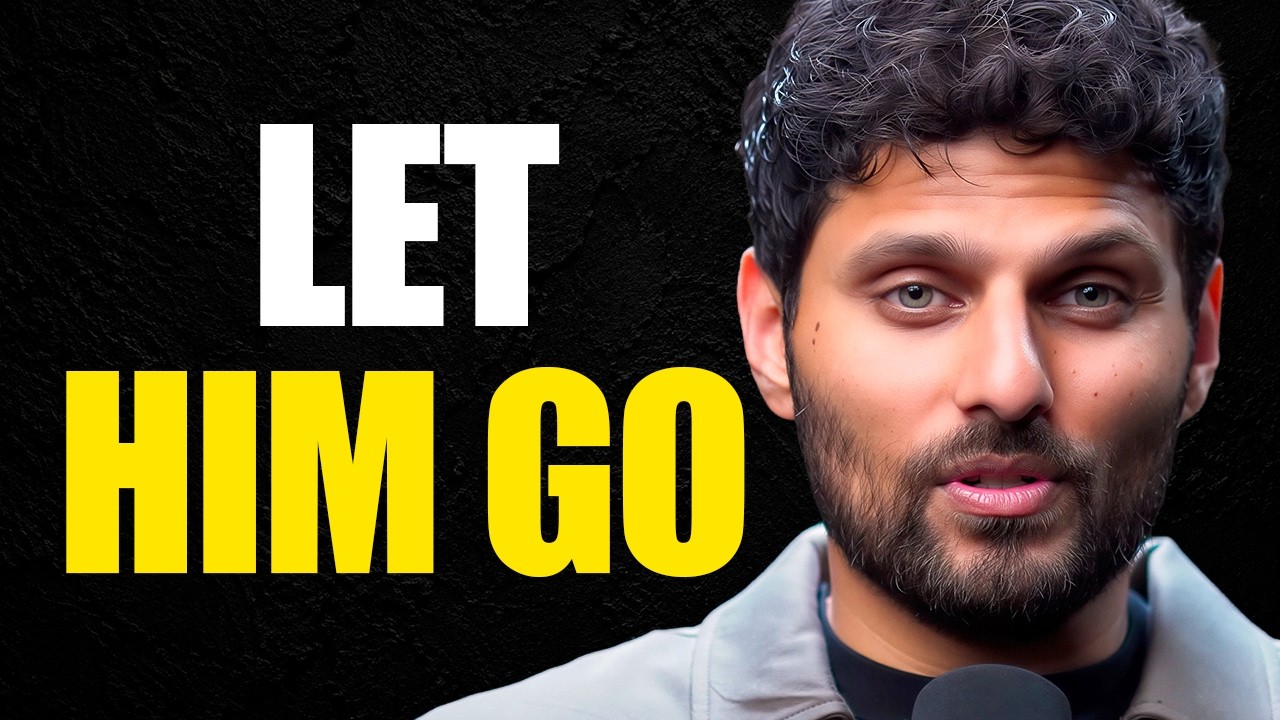
نص حلقة: Give Me 19 Minutes & You Will Know If It’s Time to Leave Your Relationship...
Jay Shetty Podcast2026-10-06
Give Me 19 Minutes & You Will Know If It’s Time to Leave Your Relationship...
Overview
Topic: Relationships
In this episode, Jay Shetty addresses a common struggle in relationships: wanting someone to change and holding onto their potential. He outlines five key insights to help viewers navigate situations where a partner or family member is not changing, emphasizing the importance of observing patterns over words, practicing radical acceptance, distinguishing between priorities and preferences, and understanding that trying to force change is often a form of control rather than love.
Minute by Minute (20)
[00:00 - 01:00] When People Change
Jay Shetty explains that people change when they are ready and when their patterns hurt them, not when they are begged or pressured by others.
[01:00 - 02:00] The Struggle with Unchanged People
Jay introduces the episode's focus on the pain of seeing someone's potential and struggling when they refuse to upgrade or change.
[02:00 - 03:00] Patterns Reveal the Truth
Jay shares a life-changing quote emphasizing that people reveal themselves through their patterns, not their words.
[03:00 - 04:00] Hardwired Patterns
He explains that deeply hardwired subconscious patterns require significant, often painful, life-altering events to change.
[04:00 - 05:00] The Illusion of Potential
Jay discusses his first point: falling in love with someone's potential is often a projection of our own unmet childhood needs.
[05:00 - 06:00] Losing Ourselves for Connection
He warns that tolerating bad treatment out of a fear of being alone leads to losing ourselves rather than changing the other person.
[06:00 - 07:00] Deciding Based on Reality
Jay reiterates that people change for themselves and asks if we are willing to stay if their patterns never change.
[07:00 - 08:00] Believe Actions, Not Words
Jay introduces the second point: believe what people do, not what they say, as repeated actions define who they truly are.
[08:00 - 09:00] Control vs. Love
He explains the third point: trying to change someone is often a form of covert control to manage our own fears of abandonment or disappointment.
[09:00 - 10:00] Accepting People Where They Are
Jay references Melody Beattie's work on codependency, noting that we can only love people where they are or choose to leave.
[10:00 - 11:00] Radical Acceptance
Jay introduces the fourth point: radical acceptance, a DBT concept by Dr. Marsha Linehan, which means accepting reality as it is.
[11:00 - 12:00] The Gap of Pain
He explains that the gap between how we want life to be and how it actually is determines the amount of pain and anxiety we experience.
[12:00 - 13:00] Protecting Your Peace
Jay emphasizes that understanding someone's trauma or potential does not mean you have to tolerate disrespect or mistreatment.
[13:00 - 14:00] What Tolerance Really Means
He clarifies that tolerance is about understanding reality while deciding whether to stay or leave, not letting others walk over you.
[14:00 - 15:00] Why We Stay
Jay discusses the fear of being alone and the false hope of change that keeps people in painful, stagnant relationships.
[15:00 - 16:00] A Personal Lesson in Selfishness
Jay shares a personal realization from his marriage with Radhi, recognizing that projecting who she should become was actually selfish.
[16:00 - 17:00] You Are Their Environment
He introduces the fifth point: you are not their mirror, you are their environment, comparing the Pygmalion effect to environmental conditioning.
[17:00 - 18:00] Rumi on Anger and Distance
Jay quotes Rumi to explain that shouting in anger happens because hearts are far apart, and notes that shouting never truly changes anyone.
[18:00 - 19:00] Priorities vs. Preferences
He advises defining non-negotiable priorities versus preferences in relationships, noting that people often change in unexpected ways.
[19:00 - 19:43] Focus on What You Can Control
Jay concludes by encouraging viewers to focus on their own actions, feelings, and decisions rather than trying to change others.
Broadcaster Questions (5)
[00:39] How many of you know someone, you see their potential, and when they don't live up to it, you feel pain?
Context: Jay Shetty introduces the core struggle of holding onto someone's potential and feeling pain when they do not live up to it.
[00:48] How many of you really want to change someone who's close to you?
Context: Jay asks the audience about their desire to change close family members, partners, or friends.
[04:26] Am I willing to stay here if the pattern remains the same?
Context: Jay prompts viewers to ask themselves this crucial question once they recognize a person's consistent behavioral patterns.
[08:57] Am I doing this for them, or to soothe my discomfort with their behavior?
Context: Jay encourages self-reflection on whether the urge to help someone change is actually about controlling them to ease one's own discomfort.
[17:05] Do you know why people shout when they're angry?
Context: Jay references a question once asked by Rumi to explain the emotional distance between people during conflicts.
Full video: Watch on YouTube