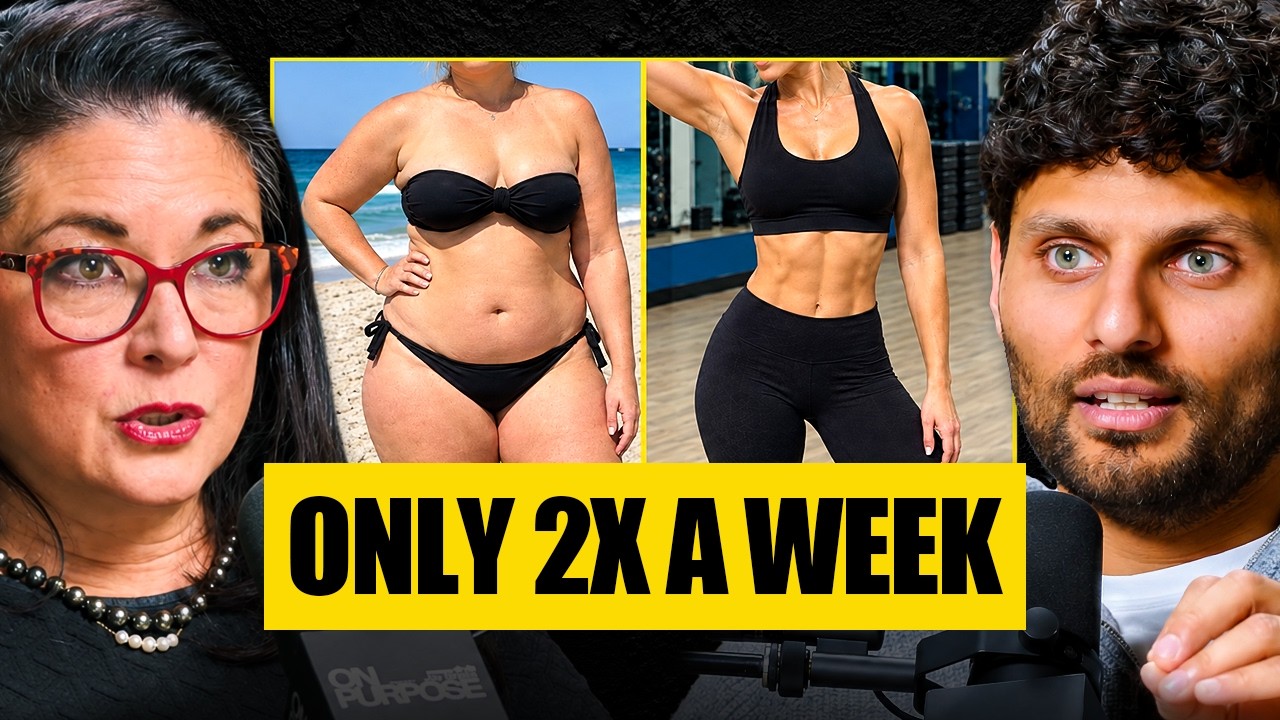
نص حلقة: Weight Loss Doctor: The Fastest Way to Lose Belly Fat (Based on Science) | Dr. Vonda Wright
Jay Shetty Podcast2026-09-28
Weight Loss Doctor: The Fastest Way to Lose Belly Fat (Based on Science) | Dr. Vonda Wright
Overview
Topic: Health and Fitness
In this episode, Jay Shetty sits down with orthopedic surgeon and longevity expert Dr. Vonda Wright to discuss the science of aging, weight loss, and maintaining vitality. Dr. Wright dispels common myths about aging, explaining that biological decline is not inevitable if we make intentional lifestyle choices. She outlines practical strategies for body recomposition, targeting stubborn visceral belly fat, and optimizing sleep, muscle mass, and bone density. Dr. Wright also shares her insights on the brain-body connection, the importance of VO2 max, and how to build sustainable habits for a healthier, longer life.
Minute by Minute (25)
[00:00 - 01:00] Old Age and Future Perception
Dr. Vonda Wright discusses how our perception of aging is tied to our view of the future, rejecting the myth that aging is an inevitable decline from youth to frailty.
[01:00 - 02:00] Priorities in Your 20s and 30s
Dr. Wright advises those in their 20s and 30s to establish healthy life habits rather than relying solely on youthful vitality.
[02:00 - 03:00] Shifting Habits in Later Decades
The discussion covers how starting healthy habits early integrates them into one's lifestyle, making them effortless later in life.
[03:00 - 04:00] Biological Aging and the First Hit
Dr. Wright explains that biological aging's first major impact occurs around age 40, when cellular repair mechanisms become less efficient.
[04:00 - 05:00] The Critical Decade (35-45)
The decade between 35 and 45 is identified as critical for establishing fitness, muscle mass, and bone density before midlife.
[05:00 - 06:00] Sleep and Muscle Mass Priorities
For those aged 35 to 45, prioritizing consistent sleep, building muscle mass, and maintaining bone density are essential.
[06:00 - 07:00] Treating the Body Like a Temple
Dr. Wright emphasizes treating the body with respect, avoiding processed foods, and maintaining it like a finely tuned machine.
[07:00 - 08:00] Hormonal Changes and Sleep Disruption
Hormonal fluctuations in both men and women in their 40s significantly disrupt sleep patterns and circadian rhythms.
[08:00 - 09:00] Sleep Hygiene and Routine
Dr. Wright shares her personal sleep schedule and emphasizes the importance of going to bed and waking up at consistent times.
[09:00 - 10:00] Managing Cortisol and Stress
The conversation shifts to managing high cortisol levels and replacing unhealthy stress-relief habits with restorative routines.
[10:00 - 11:00] Muscle and Bone Loss
Dr. Wright explains the physiological consequences of inactivity during midlife, leading to muscle wasting and bone density loss.
[11:00 - 12:00] Body Recomposition and Weight Loss
Rather than focusing solely on weight, Dr. Wright advocates for body recomposition through lifting heavy weights and proper nutrition.
[12:00 - 13:00] HIIT vs. Sprinting
Dr. Wright explains why traditional high-intensity interval training (HIIT) can lead to injury and why structured sprint intervals are more effective.
[13:00 - 14:00] Evolutionary Need for Intensity
The evolutionary basis for high-intensity training is discussed, drawing parallels to hunter-gatherer lifestyles.
[14:00 - 15:00] Losing Stubborn Belly Fat
Dr. Wright shares strategies for targeting visceral belly fat through resistance training, sprinting, and dietary adjustments.
[15:00 - 16:00] Visceral vs. Peripheral Fat
The difference between subcutaneous (peripheral) fat and dangerous visceral fat surrounding internal organs is explained.
[16:00 - 17:00] Measuring Fitness and Health
Dr. Wright discusses key metrics for assessing health, including VO2 max, fasting blood glucose, and body composition.
[17:00 - 18:00] Ideal Workout Length
The ideal duration and frequency of workouts are discussed, emphasizing quality and consistency over long hours in the gym.
[18:00 - 19:00] Bone Health and Osteocalcin
Dr. Wright highlights the active role of bones in releasing proteins like osteocalcin, which benefit brain and metabolic health.
[19:00 - 20:00] Functional Exercises vs. Machines
Functional movements like squats and deadlifts are recommended over gym machines to build balance and real-world strength.
[20:00 - 21:00] Brain-Body Connection and Aging
The impact of physical activity on cognitive function, neurogenesis, and preventing brain aging is explored.
[21:00 - 22:00] Using Data to Drive Health
Dr. Wright and Jay discuss how tracking personal health data, like continuous glucose monitoring, can motivate positive behavior changes.
[22:00 - 23:00] Dispelling Myths About Running
Dr. Wright dispels the common myth that running causes joint arthritis, highlighting its cardiovascular benefits.
[23:00 - 24:00] Changing Beliefs on Fitness
Dr. Wright reflects on how her views on high-frequency high-intensity training have evolved toward a more balanced approach.
[24:00 - 25:00] The Ultimate Health Law
If she could establish one global health law, Dr. Wright would mandate walking as a primary mode of daily transportation.
Broadcaster Questions (22)
[00:00] At what age are we actually old?
Context: Jay Shetty opens the conversation by asking Dr. Vonda Wright about the age at which we are considered old.
[01:24] So I want to ask you, if someone listening right now is between the ages of 20 to 30, what should their priorities be?
Context: Jay asks Dr. Wright about the health and lifestyle priorities for individuals in their 20s and 30s.
[02:52] How much harder is it in our 30s and then in our 40s to shift to those healthy habits than if we started earlier?
Context: Jay asks about the difficulty of establishing healthy habits in later decades compared to starting early.
[03:43] But biologically, how much harder is it to like say lose that belly fat?
Context: Jay inquires about the biological challenges of losing belly fat as we age.
[05:31] So I'm 37 right now. I'm seven years away from the end of that, from that first hit. What would be the top priorities for someone between that 35 to 45?
Context: Jay asks about the key health priorities for the critical decade between ages 35 and 45.
[07:30] Is there something that happens in our 35 to 45 and onward range that our sleep starts to become less consistent?
Context: Jay asks about the biological reasons behind sleep inconsistency during midlife.
[12:52] I think one of the things that is really challenging people right now is our cortisol levels are so high... How do we kind of deal with that emotional feeling...
Context: Jay asks how to manage high cortisol levels and the emotional urge to use unhealthy habits for stress relief.
[14:17] What's happening to our bones and muscles during that time if we do nothing?
Context: Jay asks about the physiological changes in bones and muscles during midlife if no action is taken.
[17:44] What would you say if someone says 'I want to change my body composition'... 'I want to lose weight'... what is the best, healthiest, quickest way I can do it?
Context: Jay asks for the most effective and healthy approach to body recomposition and weight loss.
[21:08] Why is it that the high-intensity interval training is not having the desired result?
Context: Jay asks why traditional high-intensity interval training (HIIT) might not yield the best results for midlife individuals.
[23:31] How did we evolve to need that kind of training?
Context: Jay asks about the evolutionary basis for high-intensity sprint training.
[26:05] For the people that are going to be mad if I don't ask this question: How do we lose that stubborn belly fat?
Context: Jay asks for specific strategies to target and lose stubborn belly fat.
[27:11] What's the difference between the good fat and the bad fat around our belly?
Context: Jay asks about the distinction between subcutaneous peripheral fat and visceral fat.
[28:23] How should someone measure their fitness and health right now if they're listening?
Context: Jay asks how individuals can accurately measure their current fitness and health status.
[30:08] What's the ideal length of workout if someone's working out four days a week?
Context: Jay asks about the optimal duration of workouts for a four-day-a-week routine.
[32:26] What can we do to strengthen our bones?
Context: Jay asks about actionable ways to build and maintain bone density.
[37:12] Is that why functional exercises like squats and stairs and things like that are somewhat better than machine exercises inside gyms?
Context: Jay asks about the benefits of functional free-weight exercises compared to gym machines.
[38:15] You spoke about neural pathways there... What are we losing out... because if you look at when we're talking about aging, brain aging is such a big part of it.
Context: Jay asks about the connection between physical movement and preventing brain aging.
[39:57] What have been some of the data points that have really helped you to make changes in your life?
Context: Jay asks Dr. Wright about the specific health metrics that have influenced her personal lifestyle choices.
[45:54] Can running be bad for you?
Context: Jay asks Dr. Wright to address the common belief that running is bad for joint health.
[46:24] What's something you used to believe to be true about health that you don't today?
Context: Jay asks Dr. Wright about a health belief she has changed her mind on over time.
[49:28] If you could create one law that everyone in the world had to follow, what would it be?
Context: Jay asks Dr. Wright to share her ultimate health recommendation in the form of a global law.
Full video: Watch on YouTube