
نص حلقة: Dr. Becky Kennedy Explains What Kids Actually Need to Feel Confident
Jay Shetty Podcast2026-09-16
Dr. Becky Kennedy Explains What Kids Actually Need to Feel Confident
Overview
Topic: Parenting and Child Development
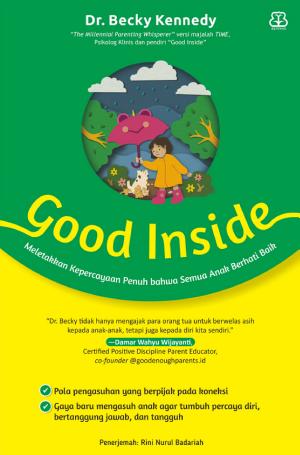
In this episode of the Jay Shetty Podcast, host Jay Shetty sits down with clinical psychologist Dr. Becky Kennedy, author of "Good Inside" and founder of the parenting platform of the same name. They discuss the modern parenting landscape, highlighting how parents have overcorrected from ignoring children's feelings to letting those feelings dictate parenting decisions. Dr. Becky explains the crucial balance between validating a child's emotions and setting firm boundaries, a concept she describes as "authority without aggression." She also emphasizes the power of "repair" over perfection, explaining that yelling at kids is less damaging than failing to reconnect and repair afterward. Additionally, they discuss the value of chores, the importance of letting kids experience discomfort to build resilience, and how to foster true self-trust and capability in children.
Minute by Minute (52)
[00:00 - 01:00] The Overcorrection in Modern Parenting
Jay Shetty introduces the topic of parenting overcorrection, quoting Dr. Becky's idea that parents have gone from ignoring kids' feelings to letting those feelings dictate parenting.
[01:00 - 02:00] From Control to Fear of Emotions
Dr. Becky explains the history of parenting styles, from control-based parenting to the modern overcorrection of being afraid of kids' emotions.
[02:00 - 03:00] Empathy and Boundaries
Dr. Becky defines validation as acknowledging a child's feelings as real, and explains that it must be paired with firm boundaries.
[03:00 - 04:00] Parenting Without a Job Description
Jay Shetty asks why parents struggle to hold boundaries, and Dr. Becky notes that parenting is often treated as purely instinctual without proper training.
[04:00 - 05:00] The Power of Repair
Jay Shetty introduces the concept of repair, and Dr. Becky explains why repair is the most critical relationship strategy.
[05:00 - 06:00] The Pressure of Being a 'Good Girl'
Dr. Becky discusses how societal expectations, particularly for mothers to be 'good girls,' create pressure to be perfect parents.
[06:00 - 07:00] Why Perfect Parents Don't Exist
Dr. Becky explains why having a perfect parent is actually not beneficial for a child's development in the real world.
[07:00 - 08:00] Rupture Moments
Dr. Becky describes a typical 'rupture moment' where a parent loses their temper, explaining that ruptures are normal.
[08:00 - 09:00] Yelling vs. Lack of Repair
Dr. Becky emphasizes that yelling itself is not what damages kids; rather, it is the lack of repair and reconnection afterward.
[09:00 - 10:00] How to Repair After Yelling
Dr. Becky role-plays how to effectively repair a relationship with a child after an outburst, rewriting the memory in their body.
[10:00 - 11:00] Expecting the Tantrum
Dr. Becky explains that setting a boundary will naturally trigger a tantrum, which parents should expect and accept.
[11:00 - 12:00] Tantrums as Healthy Responses
Dr. Becky discusses how a child's tantrum is a healthy response to a boundary, not a sign of parental failure.
[12:00 - 13:00] Authority Without Aggression
Dr. Becky role-plays a scenario of a child misbehaving at a birthday party, demonstrating authority without aggression.
[13:00 - 14:00] A Parenting Win
Dr. Becky continues the birthday party example, explaining how taking a child home can be a positive parenting win.
[14:00 - 15:00] Defining a True Boundary
Dr. Becky defines a boundary as an action the parent will take, rather than a demand for the child to change their behavior.
[15:00 - 16:00] The Elevator Button Example
Dr. Becky uses the example of elevator buttons to illustrate how to physically enforce a boundary calmly.
[16:00 - 17:00] Validation is Not Agreement
Dr. Becky explains that validation does not mean giving in to a child's demands, but simply acknowledging their perspective.
[17:00 - 18:00] Am I Safe? Am I Real?
Dr. Becky outlines the two fundamental questions children ask: 'Am I safe?' and 'Am I real?'
[18:00 - 19:00] Goals for Our Children
Jay Shetty asks how boundaries and validation shape a child's future, and Dr. Becky shares her core goals for children.
[19:00 - 20:00] Sitting on the Bench
Dr. Becky introduces the 'bench in the garden' metaphor, representing sitting with a child in their difficult feelings.
[20:00 - 21:00] The Danger of Constant Happiness
Dr. Becky explains how constantly trying to make kids happy can inadvertently wire them for anxiety in adulthood.
[21:00 - 22:00] Three Powerful Lines
Dr. Becky shares three essential phrases for parents: 'I'm glad you're talking to me,' 'I believe you,' and 'Tell me more.'
[22:00 - 23:00] Jay's Childhood Chores
Jay Shetty shares his childhood experience of doing chores and asks about the value of discipline and chores.
[23:00 - 24:00] The Value of Doing Boring Things
Dr. Becky explains why it is beneficial for children to engage in unpleasurable or boring tasks like chores.
[24:00 - 25:00] Fostering Impact and Purpose
Dr. Becky discusses how chores foster a sense of impact, purpose, and contribution within the family unit.
[25:00 - 26:00] Jay's Early Work Experience
Jay Shetty reflects on how early work experiences shaped his own capability and work ethic.
[26:00 - 27:00] Building Real-World Capability
Dr. Becky explains how parents can build capability in children by letting them handle real-world tasks.
[27:00 - 28:00] Conclusion and Gratitude
Jay Shetty thanks Dr. Becky for her profound insights, and they conclude the conversation.
[28:00 - 29:00] Learning from Mistakes
Dr. Becky discusses the importance of letting kids make mistakes and experience natural consequences.
[29:00 - 30:00] Supporting Through Failure
Dr. Becky explains how parents can support kids through failure without rescuing them.
[30:00 - 31:00] Praise vs. Encouragement
Dr. Becky talks about the difference between praise and encouragement, and how praise can sometimes undermine intrinsic motivation.
[31:00 - 32:00] Descriptive Encouragement
Dr. Becky explains how to use descriptive encouragement instead of evaluative praise to build a child's self-esteem.
[32:00 - 33:00] Managing Screen Time
Jay Shetty asks about managing screen time and technology, and Dr. Becky shares her approach to digital boundaries.
[33:00 - 34:00] Collaborative Screen Limits
Dr. Becky discusses how to have collaborative conversations with kids about screen time limits.
[34:00 - 35:00] The Concept of Sturdiness
Dr. Becky explains the concept of 'sturdiness' in parenting, which means being able to tolerate a child's distress.
[35:00 - 36:00] Self-Regulation for Parents
Dr. Becky talks about how parents can regulate their own nervous systems when their child is having a meltdown.
[36:00 - 37:00] The Role of Play
Dr. Becky discusses the role of play in child development and how parents can connect with kids through play.
[37:00 - 38:00] Processing Emotions Through Play
Dr. Becky explains how child-led play can help kids process difficult emotions and experiences.
[38:00 - 39:00] Handling Sibling Rivalry
Jay Shetty asks about sibling rivalry and how to handle conflicts between children.
[39:00 - 40:00] Avoiding the Judge Role
Dr. Becky shares strategies for managing sibling conflict, emphasizing that parents shouldn't act as judges.
[40:00 - 41:00] Validating Siblings Separately
Dr. Becky explains how to validate each sibling's feelings separately to reduce resentment.
[41:00 - 42:00] Preparing for Transitions
Dr. Becky discusses how to prepare kids for transitions, such as starting school or moving to a new house.
[42:00 - 43:00] Pre-Playing Transitions
Dr. Becky explains the importance of 'pre-playing' transitions to help kids feel more in control.
[43:00 - 44:00] The Impact of Modeling
Jay Shetty asks about the impact of parental modeling on children's behavior and values.
[44:00 - 45:00] Actions Speak Louder Than Words
Dr. Becky explains that kids learn more from what parents do than what they say, highlighting self-care.
[45:00 - 46:00] Modeling Healthy Regulation
Dr. Becky discusses how parents can model healthy emotional regulation and boundary-setting in their own lives.
[46:00 - 47:00] The Need for Parent Community
Dr. Becky talks about the importance of community and support for parents, introducing her platform's mission.
[47:00 - 48:00] The Good Inside Platform
Dr. Becky explains how the Good Inside platform helps parents connect and share experiences.
[48:00 - 49:00] Advice for Overwhelmed Parents
Jay Shetty asks Dr. Becky about her final piece of advice for parents who feel overwhelmed.
[49:00 - 50:00] Self-Compassion in Parenting
Dr. Becky shares a reassuring message about self-compassion and the power of small changes in parenting.
[50:00 - 51:00] Final Thoughts
Jay Shetty expresses his gratitude to Dr. Becky, and they wrap up the podcast episode.
[51:00 - 51:21] Outro
Outro and final remarks from Jay Shetty, encouraging viewers to subscribe and check out Dr. Becky's work.
Broadcaster Questions (6)
[00:09] Talk to me about that.
Context: Jay Shetty asks Dr. Becky to elaborate on the shift from ignoring kids' feelings to letting them dictate parenting.
[02:55] Why do we find that so tough? Why is that so hard to do as a parent?
Context: Jay Shetty asks why it is so difficult for parents to combine empathy with firm boundaries.
[03:17] Talk to me about what parents instinctively do... and then talk to me about how you repair that.
Context: Jay Shetty asks about typical parental reactions and how to repair the relationship afterward.
[07:00] What is a parent's job?
Context: Jay Shetty asks what a parent's job actually is, if it's not to make their kids happy.
[11:59] Where's the... is there any hugging, is there affection?
Context: Jay Shetty asks about the role of physical affection when holding boundaries.
[13:44] What is the value of discipline even when you hate it, and what early chores are healthy and useful?
Context: Jay Shetty asks about the importance of chores and discipline.
Full video: Watch on YouTube
كتب ذات صلة
GOOD INSIDE
Becky Kennedy