
نص حلقة: Dream Expert: What It Actually Means When They Show Up in Your Dreams | Dr. Rahul Jandial
Jay Shetty Podcast2026-09-07
Dream Expert: What It Actually Means When They Show Up in Your Dreams | Dr. Rahul Jandial
Overview
Topic: The science, psychology, and evolutionary purpose of dreams, nightmares, and lucid dreaming.
In this episode, host Jay Shetty sits down with brain surgeon and neuroscientist Dr. Rahul Jandial to discuss the fascinating science of dreaming. Dr. Jandial debunks common myths about sleep, explaining that the brain remains highly active and electrically vibrant while we dream. They explore the evolutionary purposes of dreaming, such as threat rehearsal and emotional processing, and delve into the patterns of common dreams like falling, being chased, and erotic dreams. Dr. Jandial also explains how nightmares can serve as cognitive training for children, how certain dream disorders can predict neurological diseases like Parkinson's years in advance, and how techniques like Imagery Rehearsal Therapy and MILD can help people rewrite their nightmares and achieve lucid dreaming.
Minute by Minute (31)
[00:00 - 01:00] The Myth of Brain Rest
Dr. Rahul Jandial debunks the myth that sleep is a time of rest for the brain, explaining that the brain remains highly active and electrically vibrant during sleep.
[01:00 - 02:00] Brain Activity During Sleep
Dr. Jandial describes how the brain burns glucose and generates significant electrical activity while we sleep, regardless of whether we remember our dreams.
[02:00 - 03:00] Why We Dream
Jay Shetty asks why we dream, and Dr. Jandial explains that dreaming is a vital process driven by the brain rather than a passive state of rest.
[03:00 - 04:00] Threat Rehearsal and Therapy
Dr. Jandial discusses various theories of dreaming, including threat rehearsal and nocturnal therapy, which help us process emotions and prepare for waking life challenges.
[04:00 - 05:00] The Creativity Engine
Dr. Jandial explains that the dreaming brain acts as a creativity engine by connecting loose dots and bypassing logical constraints.
[05:00 - 06:00] High-Intensity Brain Training
Dreaming is described as high-intensity training that keeps neurons active and engaged, ensuring they remain available for cognitive tasks the next day.
[06:00 - 07:00] Categorizing Dreams
Jay Shetty asks about categorizing dreams, and Dr. Jandial notes that while individual dreams are wild, analyzing large datasets reveals common patterns.
[07:00 - 08:00] Universal Dream Patterns
Dr. Jandial discusses universal dream themes, such as nightmares, falling, and being chased, which are common across different cultures and generations.
[08:00 - 09:00] Waking vs. Dreaming Brain
The differences between the waking brain and the dreaming brain are explored, highlighting how the executive network dampens during sleep.
[09:00 - 10:00] Liberated Imagination
With logic and math abilities dampened during sleep, the brain's emotional and imaginative networks are liberated, explaining the lack of math in dreams.
[10:00 - 11:00] Shared Human Struggles
Jay Shetty reflects on how dream patterns show that humans share similar emotional struggles, even when they feel isolated in their experiences.
[11:00 - 12:00] Dreams of Reconciliation
Dr. Jandial shares a study showing that divorced women who dreamed of reconciliation and moving on recovered better than those who did not.
[12:00 - 13:00] Coping with Waking Stress
The connection between dream content and waking life stress is discussed, showing how dreams help us digest and process difficult emotions.
[13:00 - 14:00] The Function of Nightmares
Dr. Jandial explains that nightmares and erotic dreams serve to cultivate and prepare the young mind, mirroring real-life developmental milestones.
[14:00 - 15:00] Engaging with Dream Life
Jay Shetty asks if we should actively engage with our dream life, and Dr. Jandial strongly encourages doing so through sleep entry and exit techniques.
[15:00 - 16:00] Technology and Dreams
The discussion turns to how modern technology, screen time, and social media might be influencing our collective dream banks.
[16:00 - 17:00] The Nature of Erotic Dreams
Dr. Jandial explains that erotic dreams are universal and often feature a narrow group of people, including celebrities or even repellent bosses.
[17:00 - 18:00] An Evolutionary Playbook
Erotic dreams are described as an evolutionary playbook designed to activate the mind and body for procreation, even for those who have never had sex.
[18:00 - 19:00] Debunking Erotic Dream Myths
Jay Shetty highlights a point from the book stating that erotic dreams are not fueled by masturbation or pornography, and Dr. Jandial explains why.
[19:00 - 20:00] Waking Fantasies and Dreams
Dr. Jandial explains that erotic dreams are more closely linked to our secret waking fantasies than to our actual physical sexual activities.
[20:00 - 21:00] Cheating and Power Dynamics
The common occurrence of cheating in dreams, even for those in happy relationships, is discussed as a manifestation of power dynamics and desire.
[21:00 - 22:00] Taking Dreams Seriously
Jay Shetty asks how to know when to take a dream seriously, and Dr. Jandial suggests focusing on highly emotional, lingering dreams.
[22:00 - 23:00] Recurrent Dreams and Brain Loops
Dr. Jandial explains that recurrent dreams are like electrical loops in the brain that can be triggered by stimulating specific brain areas.
[23:00 - 24:00] Imagery Rehearsal Therapy
Dr. Jandial introduces Imagery Rehearsal Therapy, a method where patients practice rewriting the endings of their nightmares while awake.
[24:00 - 25:00] Dreams vs. Hallucinations
The distinction between hallucinations and dreams is made, noting that dreaming is a fully imagined landscape rather than an altered reality.
[25:00 - 26:00] Predicting Health Through Dreams
Jay Shetty asks if dreams can predict health issues, and Dr. Jandial shares how certain dream disorders can act as early warning signs for Parkinson's.
[26:00 - 27:00] REM Behavior Disorder
Dr. Jandial explains REM Behavior Disorder (or dream enactment behavior), where middle-aged men physically act out their dreams, predicting Parkinson's years later.
[27:00 - 28:00] The Science of Lucid Dreaming
Jay Shetty asks about lucid dreaming, and Dr. Jandial explains the scientific proof behind it, including studies involving eye-movement communication.
[28:00 - 29:00] Communicating from a Dream
Dr. Jandial describes how researchers proved lucid dreaming by having sleeping participants communicate via pre-arranged eye movements.
[29:00 - 30:00] The MILD Technique
For beginners wanting to try lucid dreaming, Dr. Jandial recommends the MILD technique, which involves waking up early and holding onto consciousness.
[30:00 - 31:19] Fast Five and Empathy
Jay Shetty concludes the interview with the Fast Five segment, where Dr. Jandial shares his final thoughts on empathy, forgiveness, and the power of dreams.
Broadcaster Questions (16)
[00:04] Does everyone dream?
Context: Jay Shetty opens the conversation by asking Dr. Rahul Jandial if dreaming is a universal human experience.
[02:00] Why do we dream, and why is it important for us to understand why we dream?
Context: Jay Shetty asks about the core premise of Dr. Jandial's book and why understanding dreams matters.
[06:01] Is there a way to start to label and define [dreams], or do you think that's unhealthy when it comes to dreaming?
Context: Jay Shetty asks if categorizing and labeling dreams is a helpful practice.
[15:20] If you don't remember your dream, does that mean that it doesn't have an effect? And are you encouraging us to actually make the subconscious conscious and reflect on our dreams?
Context: Jay Shetty asks about the psychological impact of forgotten dreams and whether we should actively try to remember them.
[16:04] Have you found links between going to sleep with your phone or without your phone and how that affects our dreams, or if you watch a particular show on TV?
Context: Jay Shetty asks about the impact of screen time and media consumption on dream content.
[17:07] Is there any reasoning to that specifically... of being erotic dreams about people you're not attracted to?
Context: Jay Shetty asks why people often have erotic dreams about individuals they do not find attractive in waking life.
[18:41] Erotic dreams are not fueled by masturbation or pornography. Walk me through that.
Context: Jay Shetty asks Dr. Jandial to explain the scientific findings regarding the triggers of erotic dreams.
[20:13] If someone's in a happy relationship, but you're saying it's still common for them to cheat in their dreams... is that an argument then that that person... is fantasizing?
Context: Jay Shetty asks about the meaning behind dreams of infidelity when the dreamer is in a happy relationship.
[21:45] How do we get better at knowing whether to take a dream seriously or not?
Context: Jay Shetty asks how to distinguish between highly significant dreams and random brain static.
[22:24] Are people having the same dream again and again, or are they having different dreams every night?
Context: Jay Shetty asks about the frequency and nature of recurring dreams.
[22:55] What does someone do if they have a recurrent dream that they don't want to have anymore?
Context: Jay Shetty asks for practical advice on how to stop unwanted recurring dreams.
[24:35] How much do we dream in events in reality versus completely fantasy-based events?
Context: Jay Shetty asks about the ratio of real-life memories to pure fantasy in our dreams.
[26:00] Can dreams predict the future, especially when it comes to health?
Context: Jay Shetty asks if dreams can serve as early warning signs or predictors of physical health issues.
[28:35] What is lucid dreaming, how common is it, and then how do we do it?
Context: Jay Shetty asks Dr. Jandial to define lucid dreaming and explain how people can experience it.
[29:14] If someone's a beginner and they want to try it, what are the first three things someone should do?
Context: Jay Shetty asks for actionable steps for beginners wanting to learn how to lucid dream.
[30:49] If you could create one law that everyone in the world had to follow, what would it be?
Context: Jay Shetty asks his final question of the Fast Five segment.
Full video: Watch on YouTube
كتب ذات صلة
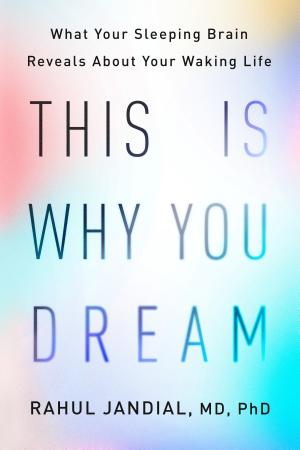
This Is Why You ..
Rahul Jandial, MD, P..