
نص حلقة: Gary Gallagher: American Civil War, Slavery, Lincoln, Grant & Lee | Lex Fridman Podcast #499
Lex Fridman2026-07-28
Gary Gallagher: American Civil War, Slavery, Lincoln, Grant & Lee | Lex Fridman Podcast #499
Overview
Topic: American Civil War
Gary Gallagher discusses the American Civil War, slavery, Lincoln, Grant, and Lee with Lex Fridman.
Minute by Minute (90)
[00:00 - 00:00:59] Minute 1
- You cannot control what a great military event can set loose. More battle casualties than US forces had suffered in every war combined down to that point happened in two days. Two and a half months after that, George B...
[01:00 - 00:01:59] Minute 2
whenever it wants to go, and there's nothing Jefferson Davis can do about it." The great forces are all that matters and individuals don't really matter notion of history I think is ridiculous. Individuals really matter....
[02:00 - 00:02:59] Minute 3
avoided, or was it inevitable? - I don't know if anything is inevitable in history, but it's certainly safe to say that the conditions were in place to make it possible- ... by the winter of 1860, '61, and the conditions...
[03:00 - 00:03:59] Minute 4
perilous a point in the view of many people then had to do with whether slavery would be allowed only where it already existed, or would it be allowed to expand. If it could expand, then it seemed that it might be concei...
[04:00 - 00:04:59] Minute 5
of the white population that is adamantly in favor of getting rid of slavery immediately. The abolitionists, they... There was even a political party called the Liberty Party, that ran a candidate in 1840 and they got a ...
[05:00 - 00:05:59] Minute 6
- It escalated into a civil war because in the presidential election of 1860... There'd been two party systems in the United States. The first party system, the Republicans, the Jeffersonian Republicans versus the Federa...
[06:00 - 00:06:59] Minute 7
Not abolish slavery, no expansion. That was the key in 1856 when they ran their first candidate. In 1860, that is again the key plank in the Republican platform. The Republican platform in 1860 says where slavery exists ...
[07:00 - 00:07:59] Minute 8
Democrat platform. You had a Unionist candidate running who just didn't wanna talk about slavery, let's talk about the Union, and you had Lincoln running as a Republican. When Lincoln won, the white South looked at Linco...
[08:00 - 00:08:59] Minute 9
and the end of February. You had the deep South went out. - What was the general view amongst the populace towards slavery? Let's kind of lay it out. Let's you know, for the audience looking back, let's put ourselves in ...
[09:00 - 00:09:59] Minute 10
were also deeply prejudiced. It's important to keep in mind that attitudes towards slavery and attitudes toward race do not, they're not necessarily the same. I mean, you could be against slavery and still be prejudiced ...
[10:00 - 00:10:59] Minute 11
and they didn't want that to happen. About 45% of the people who lived in the free states were Democrats. Most Democrats had no problem with slavery. I mean, absolutely no problem with the institution of slavery. There w...
[11:00 - 00:11:59] Minute 12
of course, did not want to be enslaved, and they were afraid of what would happen if they weren't enslaved anymore. They had in the backs of their minds Haiti. Is that what's gonna... If you live in one of the coastal di...
[12:00 - 00:12:59] Minute 13
ubiquitous. It existed in virtually every major civilization in the history of humans. Mesopotamia, Egypt, Greece, Rome, China, the Islamic world, Africa, the Americas, North and South America. We should also say somethi...
[13:00 - 00:13:59] Minute 14
into our history and geographically is much larger than we often study in the context of the United States. - One thing the war, the Civil War, which I'll just call the war for the rest of our discussion, I mean, one thi...
[14:00 - 00:14:59] Minute 15
wrong. It was not on its way out. It was thriving. Lincoln said at one point he thought it might have lasted another fifty years, and I don't know how many years it would have lasted, but I think it would have lasted lon...
[15:00 - 00:15:59] Minute 16
and perhaps it is the reason, Again, a bit out of scope, but maybe it helps lay out the land. Let's look at the nineteenth century. So most slave-owning societies of the era were able to abolish slavery without people dy...
[16:00 - 00:16:59] Minute 17
dead soldiers we're talking about. The number for years was six hundred and eighteen thousand, and that's been revised lately. I think we're probably certainly more than seven hundred thousand. By far the bloodiest war i...
[17:00 - 00:17:59] Minute 18
rebellion, which is what they called this. They didn't call it the Civil War for the most part during the war. It's the War of the Rebellion. That's the goal initially. As the war goes on and becomes costlier and more al...
[18:00 - 00:18:59] Minute 19
on his war-making power as commander-in-chief in a time of open rebellion. His inclination, there's no-- He's often been criticized for not including the soaring language he was capable of in the Emancipation Proclamatio...
[19:00 - 00:19:59] Minute 20
across all parts of the loyal states and not as controversial as it was. It was still intensely controversial. It alienated many Democrats when he issued it, who said, "You're changing what this war is about. We're willi...
[20:00 - 00:20:59] Minute 21
power. So he exempted parts of states and areas in the South that it didn't apply to as of the moment he signed it. Going forward, any place that the United States Army went where it hadn't been on January 1st, 1863, the...
[21:00 - 00:21:59] Minute 22
His proclamation is broader than the Second Confiscation Act was. - Okay. There's so many tangents we can take, but let's zoom out once again. There's a difference between cause, as you've talked about, cause and motivat...
[22:00 - 00:22:59] Minute 23
Let's go to the next question. The next question is, okay, so were most white people motivated to put on blue uniforms because they wanted to kill slavery? The answer to that is no, they were not. They were motivated to ...
[23:00 - 00:23:59] Minute 24
succeed, but it means you're not doomed to be what your father was. And those are worth fighting for. And so I will put on a uniform so the slave-holding aristocrats and oligarchs, which is what they called them, of the ...
[24:00 - 00:24:59] Minute 25
go. Part of the compact is I'm a citizen. I derive these benefits from this republic, from the Union. I can have a voice in government. I can rise economically or have the chance to. I owe my service to that republic. Th...
[25:00 - 00:25:59] Minute 26
- And let me have a very brief rant on North and South. I prefer to see this as a war between two mid-19th-century republics, One of which didn't last very long and spent its whole life in the midst of a great war. There...
[26:00 - 00:26:59] Minute 27
1787 in Philadelphia, that hot, steamy, humid summer of 1787 to come up with the Constitution. The Confederates did it quickly 'cause they basically had the US Constitution here, a blank piece of paper over here ... copi...
[27:00 - 00:27:59] Minute 28
don't deserve, and my response to that is they have a national government. They have a Senate. They have a Congress. They have an army. They have a navy. They have departments. They... It's... It walks like a duck. It qu...
[28:00 - 00:28:59] Minute 29
controversial things that you express are controversial from that small minority of folks on both sides for different reasons - Yes. I won't be... One of my favorite pieces of hate mail I got was an email where this guy,...
[29:00 - 00:29:59] Minute 30
Douglas talked about how much he loved the Union. Lincoln talked about how much he loved the Union. Breckinridge talked about how much he loved the Union. They're all... And John Bell, who's the Unionist, the Constitutio...
[30:00 - 00:30:59] Minute 31
- I didn't think it was so much. - Okay. I'm sorry. Go ahead. I won't distract. - No. The, I tell my students at the beginning of my Civil War class that if they couldn't explain, I didn't use Ohio. I said, "If you can't...
[31:00 - 00:31:59] Minute 32
nothing. You had to step up and save this precious republic that had put in place by the revolutionary generation and gave its citizens the benefits that I've already talked about. That's why they would put on a uniform ...
[32:00 - 00:32:59] Minute 33
- I actually think many people probably still feel that way, but they're not the ones who are on television- ... most of the time. Republicans in the midst of the war commented about the fact that even with this gigantic...
[33:00 - 00:33:59] Minute 34
would say, "Look at our republic. It is-- It offers so much to people that even in the midst of this great war, they're still coming- ... to the United States." - And like you said, both sides, both these republics claim...
[34:00 - 00:34:59] Minute 35
... of course. State rights is always available in United States history for somebody who's not happy with what the federal government is doing. During the War of 1812, it was New England that most often talked- ... abou...
[35:00 - 00:35:59] Minute 36
ramp-up to the Civil War, with what were called personal liberty laws. They tried to interpose their state power in between a federal government that would use its power to to force escaped, enslaved people back into sla...
[36:00 - 00:36:59] Minute 37
government, the US government never forced people into uniform before the Civil War. The Confederates did it first. They did it in the spring of 1862. They passed a national graduated income tax. And when taxing didn't w...
[37:00 - 00:37:59] Minute 38
corpus just like Abraham Lincoln did in selected situations. - And of course, we should really emphasize that on both sides, those volunteers, the on the Confederacy, there's a very large number of people percentage-wise...
[38:00 - 00:38:59] Minute 39
Well, that outraged... I mean, "That's, you're breaking faith with us," they said. They didn't stop there. Later they revised it when the war kept going on and then the three years guys were gonna get out, then the Congr...
[39:00 - 00:39:59] Minute 40
back to my conversation with Gary Gallagher. All right, we're back. There's so many different directions we can go, but I am somebody who believes that individuals can steer the direction of history. So one angle to look...
[40:00 - 00:40:59] Minute 41
there is McClellan, there is John Brown, a militant abolitionist. Many more figures, but let's look at three at first. Let's look at Lincoln, Grant, and Lee. Lincoln first. So Abraham Lincoln, we have this backwoods lawy...
[41:00 - 00:41:59] Minute 42
came from his very poor background. You said he had a year of schooling. You're being very generous to him there. He didn't even really have a year of formal schooling. And you end up with a person who is the most eloque...
[42:00 - 00:42:59] Minute 43
abolitionist, but he hated the institution of slavery and he was very happy to see that slavery was added to the roster of what the United States would insist on at the end of the war. He's able to let all the other thin...
[43:00 - 00:43:59] Minute 44
over the scope of those wars, and that is about as many people as were shot in a few hours at Antietam. It's just very different to get students now to understand the different scale, and that's what Lincoln's dealing wi...
[44:00 - 00:44:59] Minute 45
cabinet, who's the most famous Republican in the country. He puts Salmon P. Chase, who's a very smart and effective and ambitious person from Ohio, in his cabinet. He surrounds himself with people who are capable and ene...
[45:00 - 00:45:59] Minute 46
the right words, the right speeches, the right debates at this moment in history. It really does make me wonder, you know, if Lincoln didn't exist, if certain humans in history didn't exist, that everything could have tu...
[46:00 - 00:46:59] Minute 47
extends the war long enough that the United States says, "We have to do this. We've gotta get rid of slavery to defeat the rebels." - So, and also on the psychological side, Lincoln is a, this is a fascinating study beca...
[47:00 - 00:47:59] Minute 48
law office. He had one two-year term in the House of Representatives in terms of national government. He had no military service to speak of, a little while in the Black Hawk War as a junior officer in the Black Hawk War...
[48:00 - 00:48:59] Minute 49
with obnoxious behavior on the part of people that he thought might deliver the goods. And a perfect example of this is George Brinton McClellan, whom we'll talk about later, his young... who was general-in-chief for a w...
[49:00 - 00:49:59] Minute 50
find in someone. And as you say, he did have depressive moments, and he-- we talk about how, what bad days presidents have. Now, Lincoln would have said, I'll take that president's worst day every day rather than the day...
[50:00 - 00:50:59] Minute 51
all implicated in it. I mean, he didn't tell them anything that they wanted to hear that day. And it was-- and it took great courage, I think, to do that at that moment, to tell an audience what they didn't want to hear....
[51:00 - 00:51:59] Minute 52
speech. The whole speech probably only lasted eight or nine minutes. And he also pays tribute to the citizen soldiers at the beginning of it because he says that the war is going well and we all know that everything depe...
[52:00 - 00:52:59] Minute 53
battlefield of that war. We have come to dedicate a portion of that field as a final resting place for those who here gave their lives that that nation might live. It is altogether fitting and proper that we should do th...
[53:00 - 00:53:59] Minute 54
devotion to that cause for which they here gave the last full measure of devotion, that we here highly resolve that these dead shall not have died in vain, that this nation, under God, shall have a new birth of freedom, ...
[54:00 - 00:54:59] Minute 55
liberties that the-- I mean, it's an amazing-- and it probably took you two minutes to read that. He was finished before most people knew he had started at Gettysburg. Almost nobody heard him say that. The one thing wron...
[55:00 - 00:55:59] Minute 56
to take risks, to take responsibility for what he was doing, whether it was a success or a failure, and not to be cast down by things that didn't work. If something didn't work, he'd say, "Okay, that didn't work. Now let...
[56:00 - 00:56:59] Minute 57
interesting to compare his record in the war and Lee's record in the war before they wound up opposing each other in Virginia in a really bloody overland campaign. Grant's total casualties in all his great battles before...
[57:00 - 00:57:59] Minute 58
was okay as long as his wife was around and he had a key staff officer to help him. The point is, alcohol never got in the way of anything Grant did during the war, and he had a superlative record of delivering victories...
[58:00 - 00:58:59] Minute 59
Grant got the actual rank. - So in part, the Grant the Butcher label was from the Overland Campaign that we'll talk about- - It is from the Overland Campaign - ... as the military decisions made there. - Yep. - Uh, many ...
[59:00 - 00:59:59] Minute 60
- He did. - What was he actually choosing in that decision? Was he choosing home? Was he choosing honor? Was he choosing slavery? And maybe just zooming out, what do we need to understand in the early steps about Robert ...
[01:00:00 - 01:00:59] Minute 61
undoes the work that George Washington put in place during the American Revolution. He chose Virginia. He didn't leave... He didn't resign his commission in the United States Army to go with the Confederacy. He resigned ...
[01:01:00 - 01:01:59] Minute 62
Winfield Scott thought he was the greatest soldier in the army, and Scott, he probably really thought, "Except for me." But Scott is a great soldier that people don't remember that way because he became a kinda Jabba the...
[01:02:00 - 01:02:59] Minute 63
abolitionist and for equal rights for women in many ways and, and he picked up a number of causes and championed them. - I think in your lecture you mentioned this thing which I just love, the slime line. - He had a-- Th...
[01:03:00 - 01:03:59] Minute 64
- Oh, absolutely. Yes, he defined it. He is the character in Birth of a Nation Stoneman, the character of Stoneman, the evil radical Republican named Stoneman, is patterned on Thaddeus Stevens. - All right. If we can, le...
[01:04:00 - 01:04:59] Minute 65
just go the tier across Alabama, Mississippi, Florida, Georgia, Texas. That's the... It's seven states. The Deep South states go out in that initial... But there's a long period then, and they gather in Montgomery, Alaba...
[01:05:00 - 01:05:59] Minute 66
Charleston, South Carolina, and a federal installation in Charleston Harbor, Fort Sumter. Much United States property and illic- and installations had been just given over to the Confederates. And the question is, can we...
[01:06:00 - 01:06:59] Minute 67
the Confederates fired the first shots. They would've said, "We were forced to fire the first shots by what Lincoln did." Nobody wanted to be the ones who fired the first shots. But in the end, it's the Confederates who ...
[01:07:00 - 01:07:59] Minute 68
The city of Richmond has 40% of all the industrial capacity in the entire Confederacy, what became the Confederacy. Virginia is the most populous state, has the largest slave population, the largest white population. It ...
[01:08:00 - 01:08:59] Minute 69
- Yes. And Mississippi and South Carolina have the highest proportion of enslaved people of any of the states. And this is an interesting little fact from the 1860 census. When you're talking about white people in the Un...
[01:09:00 - 01:09:59] Minute 70
lot of different decisions that could have been made, even on the political side, that could have turned the tides. - For example, there's a secession convention in Virginia. It goes in... It votes twice against secessio...
[01:10:00 - 01:10:59] Minute 71
and Virginia gives you Lee, Jackson, Jeb Stuart. I mean, it, and the most soldiers of any state in the Confederacy. It's just, it's a real game changer to get Virginia. Plus, it also gives you these unbelievable ties to ...
[01:11:00 - 01:11:59] Minute 72
happen in a sequence. They don't just sort of happen. Lincoln's elected, then South Carolina secedes, then other states secede, then... I mean, things happen as a consequence of what happened before, and you have these v...
[01:12:00 - 01:12:59] Minute 73
- Yeah, there would be a continued heated political debates, intense political debates about the expansion of slavery, but it would not cause rebellion to then escalate into a full-on hot war. - I think that's conceivabl...
[01:13:00 - 01:13:59] Minute 74
gonna continue for a war that long. I mean, there was a period in the literature, in the scholarly literature in the 1980s and into the 1990s where they argued that the Confederacy wasn't a nation, and the proof was that...
[01:14:00 - 01:14:59] Minute 75
That's... If that's a measure of dedication- - If that's your measure of dedication, yes, and it seems to me that it should be one of the metrics that you bring to play that, that it's... They just keep at it. They didn'...
[01:15:00 - 01:15:59] Minute 76
lot of unhappiness with the war behind the lines in the Confederacy, absolutely, unhappiness with the government. There's desertion. About 15% of Confederate soldiers deserted. About 12% of United States soldiers deserte...
[01:16:00 - 01:16:59] Minute 77
rediscover the brotherhood. - You mean at Appomattox you're talking about- - Appomattox - ... the terms at Appomattox. - Yes. - Yes, the... And those were... And he didn't just reach up in the air and say, "I've got some...
[01:17:00 - 01:17:59] Minute 78
- From the perspective of the Union, what do you think about that kind of forgiveness? - Well, I think that it was sort of a nod toward the direction of forgiveness, but I don't think the real... I don't think real forgi...
[01:18:00 - 01:18:59] Minute 79
but you can see resonances of the Civil War because it's such a profoundly disruptive event that gets right at the heart of what the republic means. I mean, and so it's... There's nothing else like it in US history, and ...
[01:19:00 - 01:19:59] Minute 80
"Those slaveholders, they're really..." No. People got on with their quotidian lives and they got to the farm or they went to their business and they did... They weren't... Nobody knew that they were living in the antebe...
[01:20:00 - 01:20:59] Minute 81
But periodically, there are these events that pop up that refocus on the differences between the sections. And you have the Kansas-Nebraska Act. You have Dred Scott. You have the caning of Charles Sumner on the floor of ...
[01:21:00 - 01:21:59] Minute 82
whether it's sparked in the Middle East or sparked in China and Taiwan, or sparked in Ukraine-Russia, or elsewhere totally surprising in the world, may be related to nuclear weapons or not. There's a sense that everythin...
[01:22:00 - 01:22:59] Minute 83
of this republic, which I still think it's a resilient republic. We're living in a sort of wacky time. Uh, but I believe that the... I think that... I have a great faith in the resiliency of the nation, I really do, of t...
[01:23:00 - 01:23:59] Minute 84
slaughter on an unimaginable scale and brings social disruption in the former slave-holding states on an unimaginable... It just couldn't be more profoundly disruptive if you're a Confederate. There's not slavery anymore...
[01:24:00 - 01:24:59] Minute 85
adaptive innovation often looks like chaos in the moment. - It absolutely does. It absolutely does. But then when you really get to the end of that story, you look, and there you are, and oh, it's okay, the nation is sti...
[01:25:00 - 01:25:59] Minute 86
federal expenditures in 1860 would've lasted about 11 days in 1865. Nobody foresaw that. Absolutely nobody foresaw that. And education legislation that would create the great land grant colleges and universities and no- ...
[01:26:00 - 01:26:59] Minute 87
progress. But in the short term, it feels like a dumpster fire. - It does. And to me, the arc of US history has been, and Lincoln talked about this too, it's an expansion of freedoms and liberties. That's the, that's the...
[01:27:00 - 01:27:59] Minute 88
250 years. This is such a fascinating study of human civilization. - And it is complicated. What we want now is a sort of cartoon version of what we Americans, as you watch popular culture, we want a 30-second view of wh...
[01:28:00 - 01:28:59] Minute 89
20-second version of anything in the past. The past is complicated, because humanoids are involved in it. They're complicated. - Yeah, the... when you look at the system as a whole. But as individual humans, we like to d...
[01:29:00 - 01:29:59] Minute 90
thought you did. - So some humility will take you a long way. - Yes, you want more of Grant, than McClellan in that, on that humility score. Grant would score high on humility. McClellan, every day, every day the first t...
Broadcaster Questions (4)
[02:15] were all related to the institution of slavery and its effects both in the states where slavery was
Context: The causes of the Civil War and whether it could have been avoided or was it inevitable.
[01:57] What were the causes of the Civil War? Could it have been avoided, or was it inevitable?
Context: The causes of the Civil War and whether it could have been avoided or was it inevitable.
[02:39] who would be making the political decisions. It's a question of whether slavery was going to be allowed on
Context: The role of slavery in the Civil War and the political decisions surrounding it.
[03:02] perilous a point in the view of many people then had to do with whether slavery would be allowed only
Context: The role of slavery in the Civil War and the political decisions surrounding it.
Full video: Watch on YouTube
كتب ذات صلة
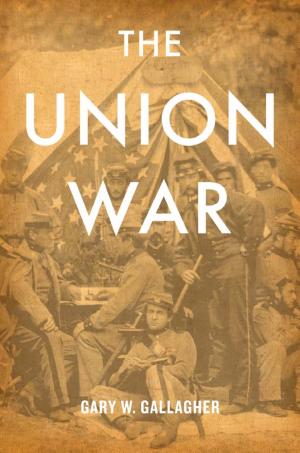
The Union War
Gary W. Gallagher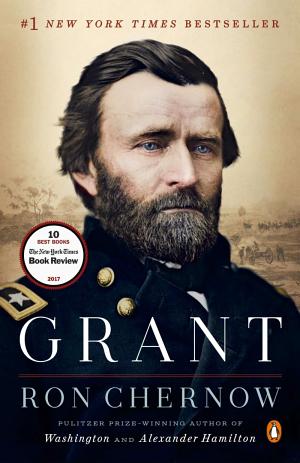
Grant
Ron Chernow
Lee
Douglas Southall Fre..
Team of Rivals: ..
Doris Kearns Goodwin
Lincoln
David Herbert Donald