
Adam Grant: You CAN Make Lasting Friendships As An Adult
Overview
Topic: Building and maintaining meaningful adult friendships and connections
In this episode of the Rich Roll Podcast, host Rich Roll sits down with organizational psychologist and bestselling author Adam Grant to discuss his book, 'Vibe: The Secrets of Strong Connections in a Lonely World'. They explore the science of human connection, distinguishing between loneliness and aloneness, and how to navigate the complexities of adult friendships. Grant breaks down relationships into categories—allies, pals, and companions—and explains how to build compatibility rather than just searching for similarity. They also discuss the importance of constructive conflict, the pitfalls of first impressions, and practical strategies for reconnecting with old friends and making new ones in an increasingly isolated world.
Minute by Minute (48)
[00:00 - 01:00] Introduction to Adam Grant and 'Vibe'
The episode opens with highlights of Adam Grant discussing the threshold of spending time alone and introducing his new book, 'Vibe', which focuses on building strong connections in a lonely world.
[01:00 - 02:00] Welcoming Adam Grant
Rich Roll welcomes Adam Grant to the studio, noting that this is their first in-person meeting after previously connecting over Zoom during the pandemic. They introduce Adam's new book, 'Vibe'.
[02:00 - 03:00] Adam's Personal Connection Journey
Adam shares his personal background as a shy, nerdy, and introverted kid who struggled with social connections, and how his relationship with conversations transformed over time.
[03:00 - 04:00] Defining a 'Vibe'
Adam defines a 'vibe' as the quality of connection between people, noting that neuroscience shows heartbeats and brainwaves actually synchronize when people are truly vibing.
[04:00 - 05:00] The Jennifer Garner Story
Adam shares a story from his book tour where Jennifer Garner stepped in last minute to host his event in LA, leading to an incredibly dynamic and unexpected conversation.
[05:00 - 06:00] Flipping the Interview Dynamic
Adam explains how Jennifer Garner bypassed standard interview questions to create a natural, high-energy back-and-forth riff, which carried over beautifully onto the stage.
[06:00 - 07:00] Establishing a Vibe in the Studio
Rich and Adam discuss the meta-experience of trying to establish a vibe and build trust in their own conversation, acknowledging the natural anxiety that comes with it.
[07:00 - 08:00] Leading with Vulnerability
Rich shares his podcasting strategy of leading with vulnerability to establish trust, while Adam praises Rich's openness and reflects on how they can maximize their connection.
[08:00 - 09:00] The Desire to Be Liked
Rich admits to his people-pleasing tendencies and the desire to be liked by his guests, which can sometimes interfere with delivering the most helpful content for the audience.
[09:00 - 10:00] Communication Habits and Response Times
Rich praises Adam's incredibly fast email response times, contrasting it with his own avoidant communication tendencies and the guilt that comes with a stacked inbox.
[10:00 - 11:00] The Epidemic of Loneliness
They discuss the modern epidemic of loneliness, exacerbated by digital screens that create a facsimile of connection while actually driving people further apart.
[11:00 - 12:00] Loneliness vs. Aloneness
Adam distinguishes between loneliness (a subjective feeling of isolation) and aloneness (the objective amount of time spent physically apart from other people).
[12:00 - 13:00] The 75% Aloneness Threshold
Adam explains that data suggests people can spend up to 75% of their time alone without feeling lonely, but exceeding that number typically leads to psychological trouble.
[13:00 - 14:00] Offloading Connection to Tech Oligarchs
Rich references a quote from Anand Giridharadas about how society has offloaded human connection to tech oligarchs who are often the least qualified to manage human interaction.
[14:00 - 15:00] Rich's Social Structure
Rich explains his own social habits, noting that his work provides deep, structured social interactions, but he often retreats to isolation once he goes home.
[15:00 - 16:00] The Friction of Adult Friendships
Rich discusses the friction of maintaining adult friendships, especially in a sprawling city like Los Angeles where meeting up requires significant travel time and effort.
[16:00 - 17:00] Allies, Pals, and Companions
Adam introduces his framework for categorizing friendships into three meaningful types: allies (goal-oriented), pals (fun-oriented), and companions (confidants).
[17:00 - 18:00] Asymmetry in Relationship Expectations
They discuss how relationships often fizzle out due to asymmetry, where one person wants a 'pal' relationship while the other views it strictly as an 'ally' connection.
[18:00 - 19:00] Adam's Padel Tennis League
Adam shares how he addressed a lack of 'pals' in his life by starting a padel tennis league in Philadelphia, creating a structured way to have fun with no professional agenda.
[19:00 - 20:00] The Fallibility of First Impressions
Adam explains how first impressions can be highly misleading, using the founders of Google, Larry Page and Sergey Brin, who initially disliked each other, as an example.
[21:00 - 22:00] C.S. Lewis and J.R.R. Tolkien
Adam shares the historical example of C.S. Lewis and J.R.R. Tolkien, who initially found each other insufferable but went on to form one of history's most impactful literary friendships.
[22:00 - 23:00] If-Then Personality Signatures
Adam explains that personalities are not static; instead, we have 'if-then' signatures where different contexts and situations bring out entirely different aspects of who we are.
[23:00 - 24:00] Accepting Personalities, Containing Behaviors
They discuss how to accept people's core personalities while still setting firm boundaries around specific unacceptable behaviors, separating the person from the action.
[24:00 - 25:00] Squarespace Sponsor Segment
Rich Roll introduces Squarespace as a sponsor, highlighting its all-in-one platform capabilities for building websites, online stores, and managing digital businesses.
[25:00 - 26:00] Squarespace Features
Rich continues discussing Squarespace, emphasizing its analytics tools, seamless customer experience, and offering a discount code for listeners.
[26:00 - 27:00] Airbnb Sponsor Segment
Rich Roll introduces Airbnb as a sponsor, sharing his personal love for travel and how staying in Airbnbs allows him to maintain his nutrition and fitness routines on the road.
[27:00 - 28:00] Hosting on Airbnb
Rich discusses the benefits of hosting on Airbnb, suggesting that listeners can list their own homes while they are away to earn extra income.
[28:00 - 29:00] Seed Health Sponsor Segment
Rich Roll introduces Seed Health as a sponsor, explaining the importance of microbiome diversity and why Seed's DS-01 Daily Synbiotic is his trusted probiotic.
[29:00 - 30:00] Seed's Clinical Efficacy
Rich explains the science behind Seed's capsule-in-capsule design, its clinical trials for bloating and regularity, and offers a discount code for listeners.
[30:00 - 31:00] Kohler Health Sponsor Segment
Rich Roll introduces Kohler Health as a sponsor, presenting 'Dekoda', a discrete toilet-mounted health tracker that monitors gut health, hydration, and potential issues.
[31:00 - 32:00] Dekoda Features
Rich explains how Dekoda provides real-time insights into gut health and hydration, highlighting its privacy features and offering a discount code.
[32:00 - 33:00] Healthy Disagreement and Avoidance
Returning to the interview, Rich and Adam discuss how people often avoid conflict or agree to disagree rather than engaging in healthy, productive arguments.
[33:00 - 34:00] The Value of Productive Conflict
Adam explains that research on marriages shows the frequency of fights doesn't predict divorce; rather, it's the constructiveness of the fights that determines relationship success.
[34:00 - 35:00] Joe Dumars and Player Management
Adam shares how NBA legend Joe Dumars successfully managed volatile players like Dennis Rodman and Rasheed Wallace by accepting their personalities but containing their behaviors.
[35:00 - 36:00] Communicating Acceptance
Adam explains that in relationships, communicating acceptance of a partner's flaws actually makes them more open and likely to change, rather than constantly criticizing them.
[36:00 - 37:00] Connecting Across Differences
Rich asks how to connect with people who hold fundamentally different worldviews, a major challenge in today's highly polarized social climate.
[37:00 - 38:00] The Political Alignment Trap
Adam shares a shocking statistic: the average person would rather interact with a politically aligned stranger than a friend who holds different political views, highlighting a misunderstanding of friendship.
[38:00 - 39:00] Solidarity Over Similarity
Adam argues that similarity is not necessary for solidarity. While similarity initially attracts people, lasting compatibility is something that is actively built over time.
[39:00 - 40:00] The Pre-Canceling Phenomenon
They discuss how social media allows us to scroll through someone's past opinions and 'pre-cancel' them, forming a rigid judgment before ever having an authentic interaction.
[40:00 - 41:00] Extending Grace to Others
Adam emphasizes the importance of extending grace to others, noting that we easily forgive our own past immaturity but rarely afford that same understanding to strangers.
[41:00 - 42:00] Adam's Feud with Brené Brown
Adam shares the story of his multi-year feud with Brené Brown, which started after he quoted her out of context in a New York Times piece, leading to a public clash.
[42:00 - 43:00] Reconciliation with Brené
Adam explains how he eventually reached out to Brené to apologize, which cleared the air and allowed them to build a deep, collaborative friendship and host a podcast together.
[43:00 - 44:00] Solomon's Paradox
Adam introduces Solomon's Paradox: the psychological phenomenon where we give excellent advice to others but make foolish decisions when it comes to our own lives.
[44:00 - 45:00] Using the Paradox to Resolve Conflict
Adam suggests that when we are stuck in a conflict, we should imagine advising a friend in the same situation, as this cognitive distance helps us access our own wisdom.
[45:00 - 46:00] The Power of a Trusted Circle
Rich discusses the value of his men's group in keeping him accountable, highlighting how surrounding yourself with trusted peers helps navigate blind spots.
[46:00 - 47:00] Advice for Lonely Young People
Adam offers advice to young people experiencing loneliness, emphasizing that the single best first step is simply joining a structured group based on a shared interest.
[47:00 - 48:00] Seeds of Peace and Hard Conversations
Adam shares data from 'Seeds of Peace', showing that discussing difficult, controversial topics actually builds stronger, more lasting friendships than just casual socializing.
[48:00 - 49:00] Closing Thoughts on 'Vibe'
Rich and Adam wrap up their conversation, reflecting on their own dynamic and encouraging listeners to pick up Adam's book, 'Vibe', to build better connections.
Broadcaster Questions (14)
[01:39] Why did you write this book or what was the impetus to this?
Context: Rich Roll asks Adam Grant about the origin story and motivation behind writing his new book, Vibe.
[03:18] What is your definition of vibe?
Context: Rich Roll asks Adam Grant to define what a 'vibe' actually means in a practical, scientific context.
[07:06] What is your advice about how you and I can create a vibe so that this becomes more dynamic of an exchange?
Context: Rich Roll asks Adam Grant for advice on how they can establish a strong connection and dynamic flow in their current interview.
[12:15] How do you distinguish the difference [between loneliness and aloneness]?
Context: Rich Roll asks Adam Grant to clarify the difference between loneliness and aloneness.
[13:12] What is the message to that person who thinks they're perfectly fine in that habit loop?
Context: Rich Roll asks Adam Grant what he would say to people who feel content being isolated and eating/living alone.
[15:12] Why are you looking for friends?
Context: Adam Grant asks Rich Roll why he feels the need to seek out new friendships at this stage in his life.
[18:31] So what is to be done?
Context: Rich Roll asks Adam Grant how to handle relationship asymmetry where expectations differ between two people.
[28:48] Talk a little bit about first impressions.
Context: Rich Roll prompts Adam Grant to share his thoughts on how first impressions can often lead us astray.
[31:13] What was the most surprising thing that you discovered delving into this world of connection?
Context: Rich Roll asks Adam Grant about the most unexpected scientific finding he uncovered while researching connection.
[35:38] How do you create sustained connection with somebody who doesn't see the world the way that you do?
Context: Rich Roll asks Adam Grant how to maintain relationships with people who hold fundamentally different worldviews.
[39:47] How does that work in your marriage?
Context: Rich Roll asks Adam Grant how his tendency to solve problems rather than just offer sympathy plays out in his marriage.
[40:40] What kinds of bonds are you missing or looking for?
Context: Adam Grant asks Rich Roll to identify what specific types of friendship bonds he feels are currently lacking in his life.
[51:09] So help me learn how to make friends.
Context: Rich Roll asks Adam Grant for practical advice on how to make friends as an adult.
[55:52] This gets into how to manage disagreement in a healthy way...?
Context: Rich Roll asks Adam Grant about how to handle conflicts and disagreements constructively without ruining relationships.
Full video: Watch on YouTube
كتب ذات صلة
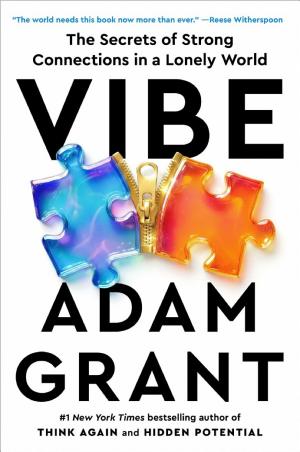
Vibe: The Secret..
Adam Grant
Think Again: The..
Adam Grant